The Lucas Gusher, 1901
On January 10, 1901, a well on Spindletop Hill near Beaumont blew in. According to the Texas State Historical Association and Lamar University, the gusher threw oil more than a hundred feet into the air, flowed at roughly a hundred thousand barrels a day, and ran uncontrolled for about nine days before it was capped. It was drilled at a depth of about 1,139 feet by Anthony F. Lucas, an engineer who understood the salt-dome geology that trapped the oil. Historians describe the moment as the birth of the modern petroleum industry.
Higgins, Gladys City, and the boom
The gusher had a long prologue. The self-taught geologist Pattillo Higgins had argued for years that oil lay beneath the hill, and in August 1892 he helped form the Gladys City Oil, Gas and Manufacturing Company to prove it. Higgins had left the company before the strike, but the townsite that grew up around the field kept the name he had chosen. The rush that followed drew speculators, drillers, and companies whose names would define the century's energy business.
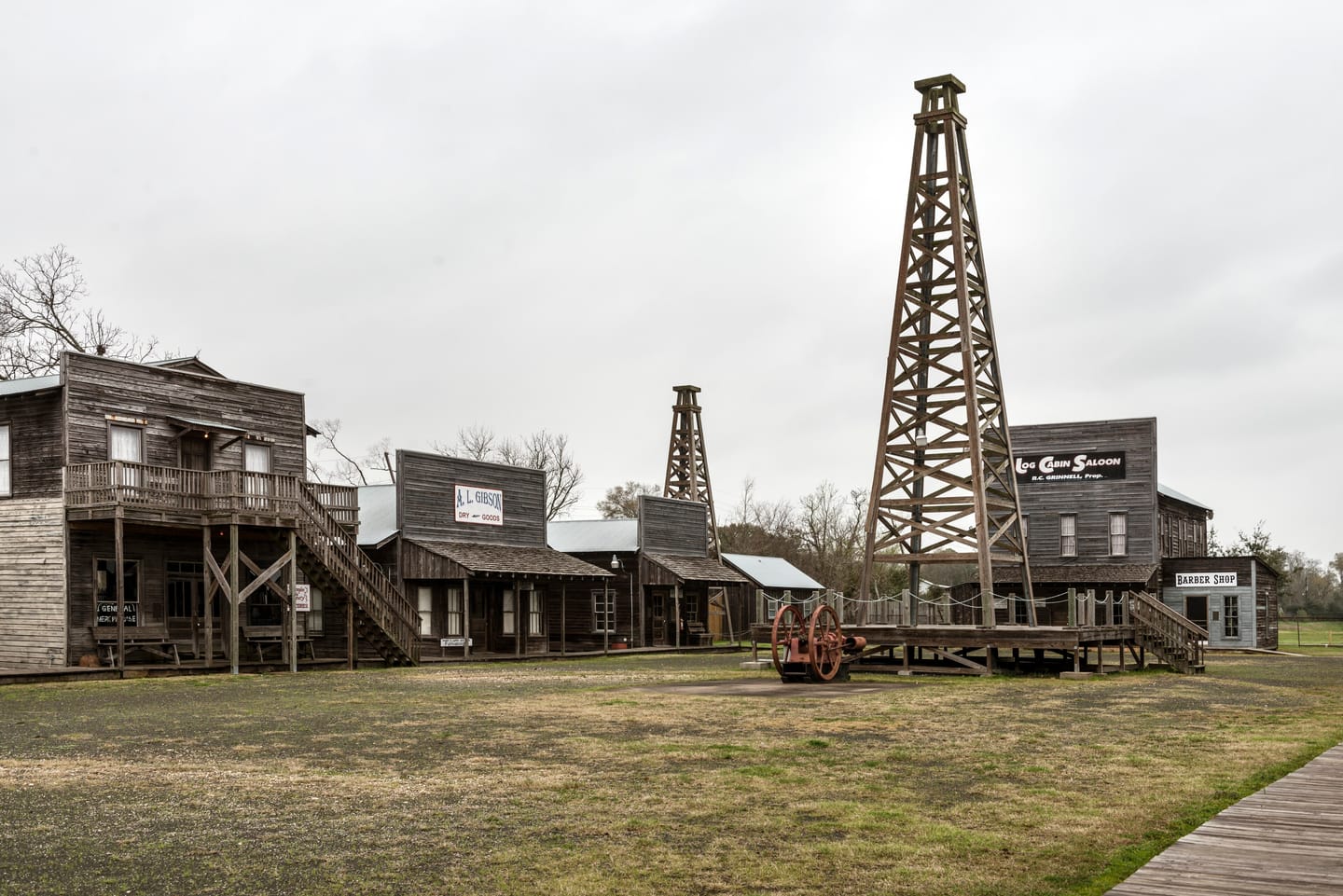
The reconstruction in the photograph above is the Spindletop-Gladys City Boomtown museum, operated by Lamar University in Beaumont. It recreates the boomtown rather than preserving original 1901 structures, and a 1941 granite monument marks the gusher's significance.
Before and beside the oil: rice and rail
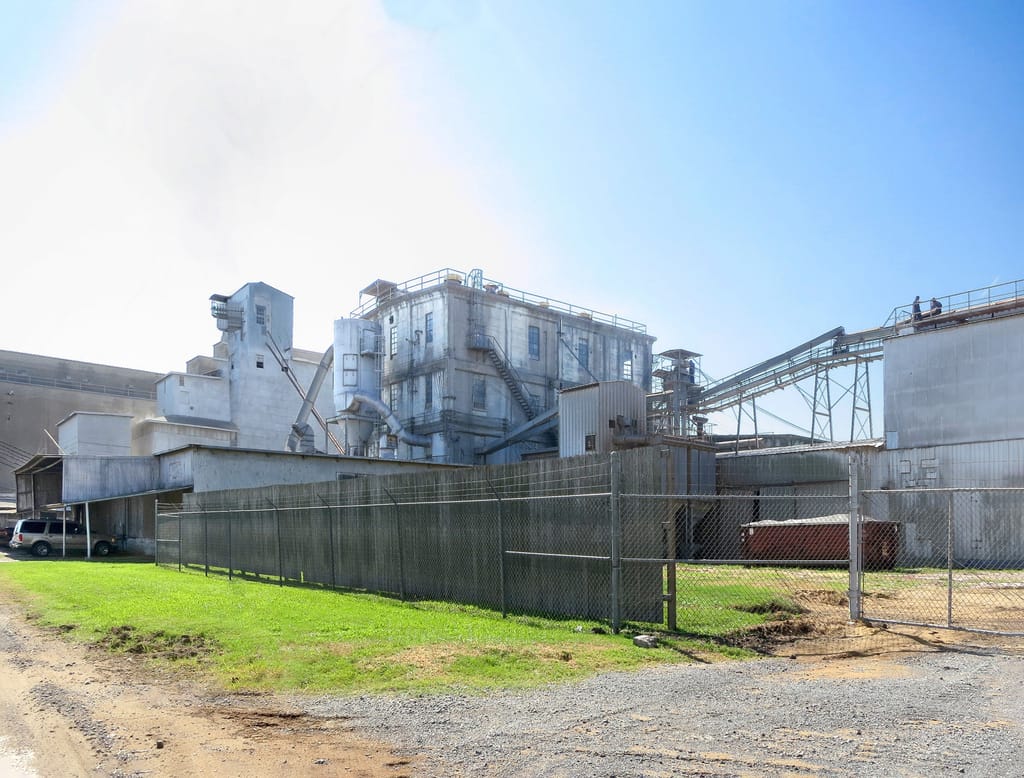
Oil was not Beaumont's only engine. The surrounding coastal prairie became major rice country, and Beaumont was central to it. The Texas State Historical Association credits J. E. Broussard's Beaumont Rice Mills as the first commercially successful rice mill in Texas. A state historical marker dates the enterprise to 1892 and its present mill building to 1907. We treat the mill as a historic industrial landmark here and make no claim about its current operating status.
Rail tied these industries together and to the coast. The same river that carried Beaumont's trade also carries the vertical-lift railroad bridge beside Riverfront Park. As oil, rice, lumber, and shipping grew, the waterway was deepened and the Port of Beaumont took shape, giving the inland city an ocean outlet.
How the pieces made the modern city
The modern Beaumont you can walk through downtown is the residue of that assembly: civic buildings and theatres from the flush decades, a port that became nationally important for military as well as commercial cargo, and a highway grid built to move people and freight across the Gulf Coast. The history is not a museum piece. It still explains why the port, the rail bridge, and the I-10 interchange sit where they do.
Sources
- ReferenceTexas State Historical Association: Spindletop Oilfield ↗The Handbook of Texas entry: dates, figures, and significance.
- Official sourceLamar University: Spindletop history and boomtown museum ↗The museum operator's history of the field and the reconstruction.
- ReferenceTexas State Historical Association: J. E. Broussard ↗Beaumont Rice Mills as the first commercially successful rice mill in Texas.
The Spindletop photograph is a public-domain image by Carol M. Highsmith from the Library of Congress. See image credits for full details.